Parallel and non-parallel features of adaptive radiation in Yucatán pupfishes
 Lake Chichancanab
Abstract
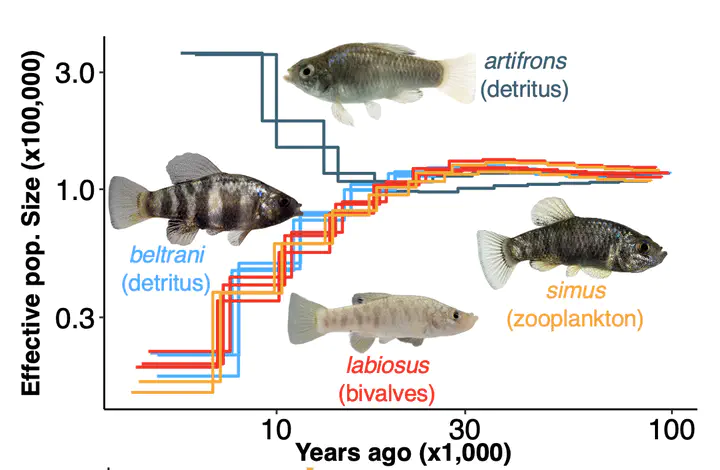
Understanding the extent of parallelism across adaptive radiations remains a central problem in evolutionary biology. We used whole-genome resequencing of 123 individuals to compare the adaptive radiation of Cyprinodon pupfishes in Lake Chichancanab, Mexico, to an independent radiation of San Salvador Island (SSI) pupfishes in the Bahamas, and assess the repeatability of adaptive genetic architecture, sources of adaptive variation, and stages of selection. Despite rapid craniofacial divergence of trophic specialists within 8-15 kya, only two candidate genes (0.5%; 2/426) were shared between Caribbean radiations. Although adaptive introgression played a major role in SSI, we found minimal evidence of adaptive introgression in Chichancanab, likely due to the geographic isolation of this inland lake. Instead, de novo mutations provided a substantial source of adaptive variation (30.6%) for the endemic zooplanktivore, 15 times higher than the endemic scale-eater on SSI. However, in parallel with SSI, we found strong evidence that adaptive divergence occurred in stages, first on regulatory and standing genetic variation, then on de novo and nonsynonymous mutations. Consistent with adaptive variants near opsin and spermatogenesis genes, functional categories unique to Chichancanab, we found greater visual acuity and divergent sperm morphology in lab-reared zooplanktivores relative to generalists using laboratory assays. Consistent with extensive adaptive de novo mutations in WNT10A and rapid diversification of tooth size in the zooplanktivore, we found that experimental inhibition of the Wnt pathway in generalists resulted in narrower oral teeth. We conclude that de novo mutations, not introgression, can drive rapid adaptive radiations in isolated environments.

Matthew Kustra
Miller Postdoctoral Research Fellow
My research interests include sexual selection, speciation, and endosymbionts.